
In today’s disrupted and fast-moving world, organizations of all kinds and sizes cannot rely solely on agile instincts and tactical thinking. The real differentiator is the capacity of leadership at all levels of the organization to think strategically, act decisively, and adapt continuously. Leadership training, when intentionally aligned with strategy, becomes the critical bridge between vision and mission on one hand and day-to-day execution on the other.
Leadership development programs too often focus on personal skills or communication style while neglecting the vital role of strategic foresight. Organizations that build foresight capability within their leaders and across their team are better equipped to detect weak signals, explore alternative futures, and make strategic choices grounded in evidence, not guesswork.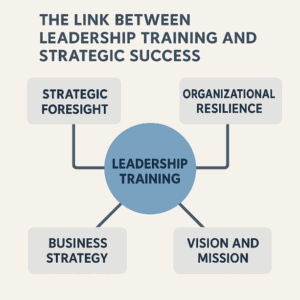
When leaders learn to integrate foresight into their business strategy, they help to create a culture that is proactive rather than reactive, i.e., one that can pivot with purpose instead of panic.
A growing number of business professionals are seeking to formalize their strategic competencies by becoming a certified Strategic Planning Professional (SPP) or Strategic Management Professional (SMP). https://www.lblstrategies.com/training-and-certification/association-for-strategic-planning-asp-certification-exam-prep/
Certification doesn’t just validate knowledge; it embeds a shared language of strategy across the organization. It reinforces a disciplined approach to planning, execution, and performance management. It transforms leadership training from a personal investment into an organizational capability.
Organizations with well-trained strategic leaders are inherently more resilient. They recover faster from disruptions because their people understand both the strategic intent and the operational levers that drive performance. Leadership training that emphasizes systems thinking, alignment, and feedback loops creates the muscle memory required to sustain organizational resilience over time.
Ultimately, leadership training must help people connect the “why” (vision and mission) with the “how” (business strategy). When leaders at all levels understand this link, they can translate broad strategic intent into clear priorities, allocate resources wisely, and inspire commitment to shared goals. This integration turns strategic plans into living systems which are adaptable, measurable, and human-centered.
Leadership and strategy are two sides of the same coin. One without the other leads to drift or burnout. Organizations that invest in developing strategic leaders position themselves for lasting success in a volatile world.
Our Mastering Strategy Certification Program helps leaders translate vision into action and cultivate a culture of strategic discipline.
Learn how certification through the International Association for Strategy Professionals (IASP) can formalize those skills and align your team behind a common strategic language. Join our upcoming IASP Info Session to get started.