
As strategy professionals we play a principal role working with leadership to organize a planning process. It is our responsibility to ensure lines of communication are established between leadership and stakeholders in the process. By stakeholders here we mean people within the organization expected to participate in the planning process. Clear communication will be instrumental in building their understanding and confidence in what’s being expected of them. In doing so, we establish a difference maker between arriving at intended outcomes or going into the ditch.
In our Strategic Management Performance System (SMPS) “Mastering Strategy” Program we emphasize the ongoing relationship between responsibility, accountability, and engagement in each phase of the strategic management process. As strategy professionals, we must be respectful that strategy level activity adds to the day-to-day responsibilities of people involved. With that in mind, we can establish communication level solutions that will manage expectations of key internal stakeholders engaged in the process. By expectations we mean effectively communicating developments throughout the planning stage, during implementation, ongoing performance management in evaluating achievement of stated outcomes (or not), and progress realizing the organization’s vision over the lifetime of the plan (i.e., the planning horizon).
Delivering strategy level communication at critical junctures in the process, as expected, will go a long way to keep those investing their valuable time, hard work, and commitment to do just that…stay invested in the process.
When it comes to strategic planning, don’t wait to communicate.
Once a core planning team consisting of board members, executive leaders, and senior managers has been assembled, it’s time to establish communications. Keeping in mind, as the internal strategy lead professional or one brought in from the outside, you are responsible for getting them organized to plan in a way that meets their expectations.
No pressure here! They’re just the people on the hotseat seen as responsible for leading and guiding the organization’s strategic planning process…one that directly and/or indirectly will affect everyone’s future in the organization.
As strategy lead, important work on your to-do list working with core team members, together and individually, includes:
- Define the scope of the program (see example below)
- Understand expectations of the leadership team
- Understand critical strategic issues
- Organize the system
- Get commitment from the top
- Outline how to organize and manage the system
Each one of these deliverables will be the product of many different engagements with executive leadership, the entire core planning team, subsets of the team, and individual interviews. When it comes to communication, they have one thing in common, what is captured must be consolidated and shared back with them when you say it will. Doing so sets the tone moving forward that the development process is being respected, work they are doing is valuable, and staying actively involved is delivering results they expected. In getting organized to plan, delivering on time as expected with this important group subliminally sets a quality standard for communicating to replicate throughout the strategy planning process.
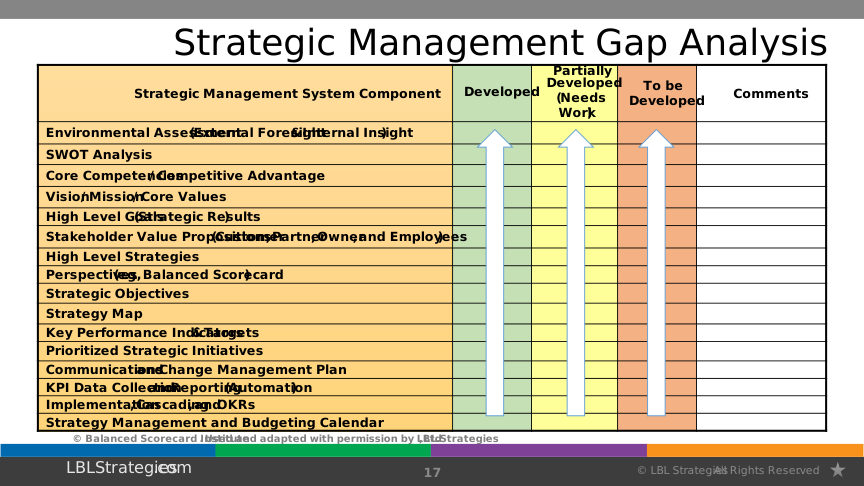
As a strategy professional with the above in mind, here’s an example of a tool provided in the SMPS “Mastering Strategy” Program that helps “getting organized to plan” get off to a great start.

The Mastering Strategy: Strategic Management Performance System Certification Program (SMPS) is offered in association with George Washington University and the Baldrige Foundation. Learners who successfully complete the program earn a university certification from George Washington University’s Center for Excellence in Public Leadership, part of the College of Professional Studies, co-endorsed by The Baldrige Foundation Institute for Performance Excellence.
The SMPS Program is intensive hands-on continuing professional education for working professionals looking to develop strategic management competencies and learn strategic tools to help their organizations succeed by:
- Imparting the full strategy management process into your everyday decisions
- Learning effective strategic planning, implementation and evaluation practices
- Learning how to lead strategic planning efforts
- Bridging the gap between planning and execution principles and practical tools to guide agile planning and decision making.
- Preparing you for the International Association for Strategy Professionals (IASP) certification (if applicable)